

 VocalSteamer Editorial Team
There is no single agreed answer to how long you should steam your voice. Four of the five NHS hospital leaflets we read give a length, and no two give the same figure, from 2–3 minutes to 10–15; the two steam experiments in our sources both used 3 minutes; and steam inhaler manuals mostly say 5 to 15.
None of these sources tested one length against another, so nothing we found supports one best number. If a clinician has given you a routine, that comes first.
What five NHS leaflets say
These are patient leaflets from UK hospital trusts, checked October 11, 2026. Two were written for specific patients: the Guy's and St Thomas' page for people having vocal cord surgery, the St George's leaflet for voice difficulties related to head and neck cancer treatment.
| NHS trust and leaflet | How long | How often | What else it says |
|---|---|---|---|
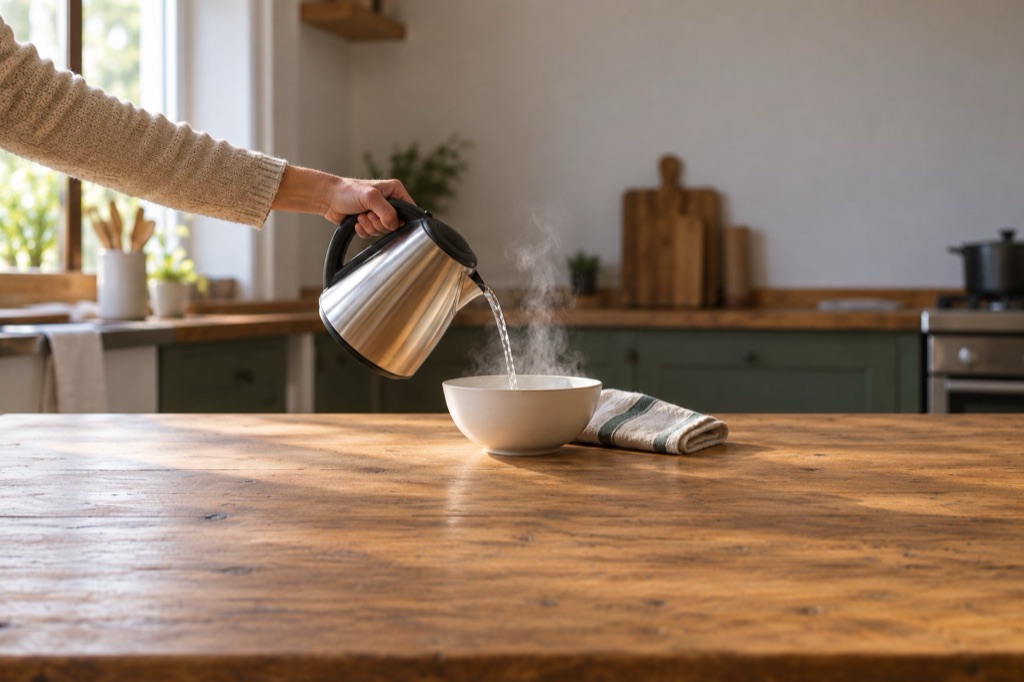
| St George's, "Voice Care" | 2–3 minutes | 3–4 times a day | Plain water only, no oils. Head at a safe distance over a bowl of hot water, under a towel. |
| Guy's and St Thomas', "Recovering from vocal cord surgery" | 5 to 10 minutes | Every day | Boiled water that has cooled a little, not water that has just boiled. Head about 20 to 25 cm (8 to 10 inches) from the water, under a towel. Part of guidance for at least the first 2 weeks after surgery. |
| Royal Berkshire, "Voice care tips for a healthy voice" | 10 minutes | Twice a day | For a dry throat. Nothing needs adding to the water. No method given. |
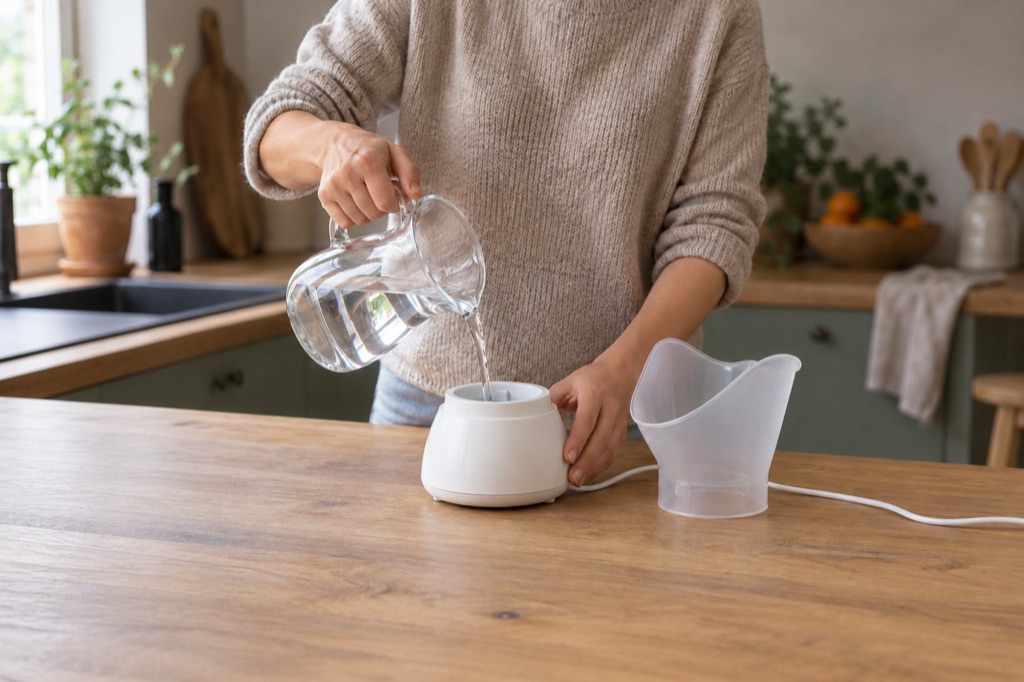
| West Suffolk, "Practical voice care" | 10–15 minutes | Once or twice a day | Prefers a steam-inhaling mug to a basin and towel. Just-boiled water from the kettle, refilled 2–3 times as it cools. Allows 2–3 drops of Olbas or tea tree oil only if you have a cold or throat infection. |
| Sherwood Forest, "Vocal hygiene: Caring for your voice" | Not stated | Not stated | Mentions steam inhalation for a dry throat; no method. |
The leaflets disagree on more than minutes: Guy's and St Thomas' rules out just-boiled water, which is what West Suffolk asks for. The frequencies differ too. By our arithmetic (no leaflet states a daily total), each leaflet's own figures multiply out to about 6 to 12 minutes a day at St George's, 20 at Royal Berkshire and 10 to 30 at West Suffolk.
None of the five cites a study comparing durations or frequencies. The bowl-and-towel method itself is in our DIY guide.

The studies used three minutes
Two experiments in our sources had participants inhale steam, and both used 3 minutes:
- Mahalingam & Boominathan, 2016 (45 vocally healthy women aged 18 to 30). About 10 minutes of mouth breathing shifted three acoustic voice measures; 3 minutes of steam, inhaled through the mouth from a facial steamer, moved them back toward baseline. The paper is labeled level of evidence 4.
- Keltz & McHenry, 2022 (12 women). A morning warm-up of 3 minutes of steam, 3 minutes of phonating through a straw into water, or both. Results were highly variable: of 7 participants analyzed, steam was best for 1 and worst for 3, who strongly disliked it.
Three minutes was the length the researchers used, not a length shown to be best. Going by the abstracts we worked from, neither study compared it with another length, and we found no study that did. Both are small, and neither shows that steam treats a voice problem. Details are in does steam help your vocal cords? and on our research page.
What steam inhaler manuals say
These are manufacturer documents, checked October 11, 2026. The official Vicks humidifier site (vickshumidifiers.com) returned a bot check to us that day, so the V1200 manual was read from an Internet Archive capture, made May 19, 2024, of the maker's PDF.
| Device and document | Session length | How often |
|---|---|---|
| Vicks Personal Steam Inhaler V1200, manual | 5 to 15 minutes | Not stated; left to the user's judgment |
| Mypurmist Free, user guide | Typical session 5 to 15 minutes | Recommends two sessions a day |
| Mypurmist 2, user guide | Typical session 5 to 15 minutes | Typically two sessions a day; says some people go longer, 30 minutes or more several times a day |
| MyPurMist Classic, manual | Suggests 10 to 15 minutes; also says it can be used "at any time and for any length of time" | Suggests twice a day |
| Crane EE-5948 cordless, manual | 15 minutes, then it switches itself off | Not stated |
These are makers' instructions for their own devices, not evidence about voices; the Vicks and MyPurMist manuals do not mention singing. General steps are in how to use a vocal steamer.
A cautious way to find your own timing
With no tested best number to give you, this is an editorial suggestion, not a clinical recommendation:
- Clinician first. If a doctor, voice clinic or speech and language therapist has given you a routine, use theirs.
- Stay inside your device's manual. On the Vicks V1200, the manual's figure is 5 to 15 minutes; the Mypurmist Free and Mypurmist 2 guides call 5 to 15 minutes a typical session.
- Start at the short end. The shortest figures in our sources are St George's 2–3 minutes (from a leaflet for head and neck cancer patients) and the 3 minutes both steam experiments used. With a device, start at the low end of its manual's range.
- Notice how your throat and voice respond, during the session and afterward. If steam makes you cough, stop and see a doctor. If you just dislike it, note that in Keltz & McHenry the 3 participants (of 7 analyzed) for whom steam was worst also strongly disliked it.
- Go longer only if you want to. Nothing in our sources shows that more minutes do more.
Steaming before singing or before bed
Before singing. No source names a gap between steaming and singing. West Suffolk's leaflet says steam can be particularly helpful for a tired, sore or hoarse voice, especially if you have to sing or speak during that time; that is a leaflet's view, not a study result. Keltz & McHenry tested steam as a morning warm-up, with the mixed results above.
Steam needs hot water or a powered steamer. Where hot water is not practical, the voice research also covers nebulized saline, a cool mist with mixed results of its own: in Tanner et al., 2007, a study of 60 vocally healthy women, no nebulized treatment significantly sped recovery of phonation threshold pressure, a lab pressure measure. Kinmilu, a store run by a company affiliated with this site's owner, sells portable mesh nebulizers; see vocal steamer vs. nebulizer.
Before bed. West Suffolk's leaflet suggests steaming before bed. The Vicks V1200 manual says not to use it while sleepy or drowsy, and the Mypurmist Free and Mypurmist 2 guides say the same of theirs, so "before bed" should mean while you are still fully alert.
After steaming: singing, talking and eating
We found no study on how soon you can sing, talk or eat after steaming. None of the five leaflets gives a waiting time, and neither do the MyPurMist materials we read.
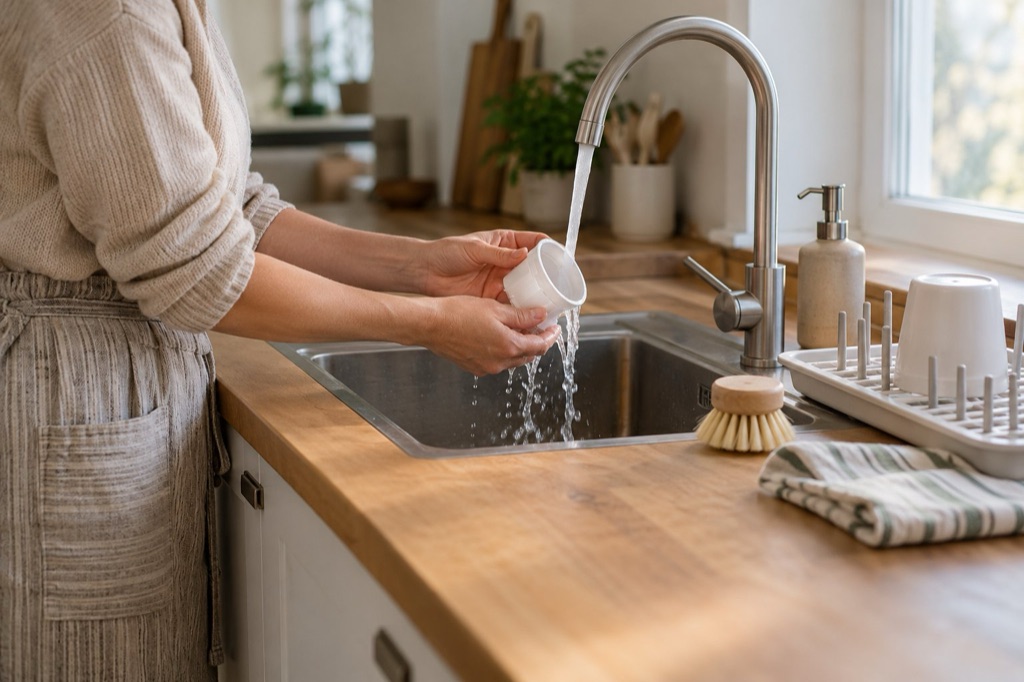
What the sources do cover after a session is the device: the Vicks V1200 manual has you switch off, unplug and let the unit cool for at least 20 minutes before cleaning, and the three MyPurMist manuals describe a 10-minute drying cycle. See how to clean a vocal steamer.
Safety, and when to see a doctor
- Burns and scalds are the risk these sources warn about. Guy's and St Thomas' says to keep your head a safe distance from the bowl. West Suffolk warns that just-boiled water needs great care and that the inhaler container must never be tipped. The Vicks V1200 manual says its water gets very hot and the unit must never be moved while in use.
- Children. Nothing here is a recommendation for children.
- Coughing. If steam makes you cough, stop and see a doctor.
- Lasting symptoms. The NIDCD advises seeing a doctor if you have been hoarse for more than three weeks (especially without a cold or flu), are coughing up blood, have trouble swallowing or breathing, feel a lump in your neck, have pain when speaking or swallowing, or lose your voice completely for more than a few days. None of these is a reason to steam more.
Questions
How long should I vocal steam for?
The NHS leaflets range from 2–3 minutes (St George's) to 10–15 minutes (West Suffolk), both steam experiments in our sources used 3 minutes, and device manuals mostly say 5 to 15. No source compares lengths, so starting short and staying within your device's manual is the cautious route.
How often should I steam my voice?
The leaflets say every day (Guy's and St Thomas'), once or twice a day (West Suffolk), twice a day (Royal Berkshire) or 3–4 times a day (St George's). The MyPurMist guides describe two sessions a day; the Vicks V1200 manual gives no frequency. We found no study comparing frequencies.
Can you steam your voice too much?
We found no study that tested an upper limit and no leaflet that names one. The longest session any of the five leaflets names is 15 minutes (West Suffolk), and more minutes means more time near hot water. If steam makes you cough, stop and see a doctor.
Sources
- St George's University Hospitals NHS Foundation Trust, "Voice Care" (published October 2023; its stated review date of October 2025 has passed): head and neck cancer patient leaflet, checked October 11, 2026
- Guy's and St Thomas' NHS Foundation Trust, "Recovering from vocal cord surgery" (last reviewed March 2024): patient web page, checked October 11, 2026
- Royal Berkshire NHS Foundation Trust, "Voice care tips for a healthy voice" (August 2025): patient leaflet, checked October 11, 2026
- West Suffolk NHS Foundation Trust, "Practical voice care" (issued August 17, 2026): patient leaflet, checked October 11, 2026
- Sherwood Forest Hospitals NHS Foundation Trust, "Vocal hygiene: Caring for your voice" (revised December 2025): patient leaflet, checked October 11, 2026
- Mahalingam & Boominathan, 2016, Laryngoscope (PubMed): lab study of 3 minutes of steam and acoustic voice measures
- Keltz & McHenry, 2022, Journal of Voice (PubMed): steam and straw-in-water phonation as a morning warm-up
- Tanner et al., 2007, Journal of Speech, Language, and Hearing Research (PubMed): nebulized saline, hypertonic saline and water after dry air
- Vicks Personal Steam Inhaler V1200, Use and Care Manual (Kaz USA): manufacturer manual, read on October 11, 2026 from the Internet Archive capture of May 19, 2024
- Mypurmist Free user guide: manufacturer PDF linked from the Mypurmist support page, checked October 11, 2026
- Mypurmist 2 user guide: manufacturer PDF linked from the Mypurmist support page, checked October 11, 2026
- MyPurMist Classic user manual: manufacturer PDF linked from the Mypurmist support page, checked October 11, 2026
- Crane EE-5948 Cordless Steam Inhaler manual: manufacturer manual, checked October 11, 2026
- NIDCD, "Hoarseness": when to see a doctor