

 VocalSteamer Editorial Team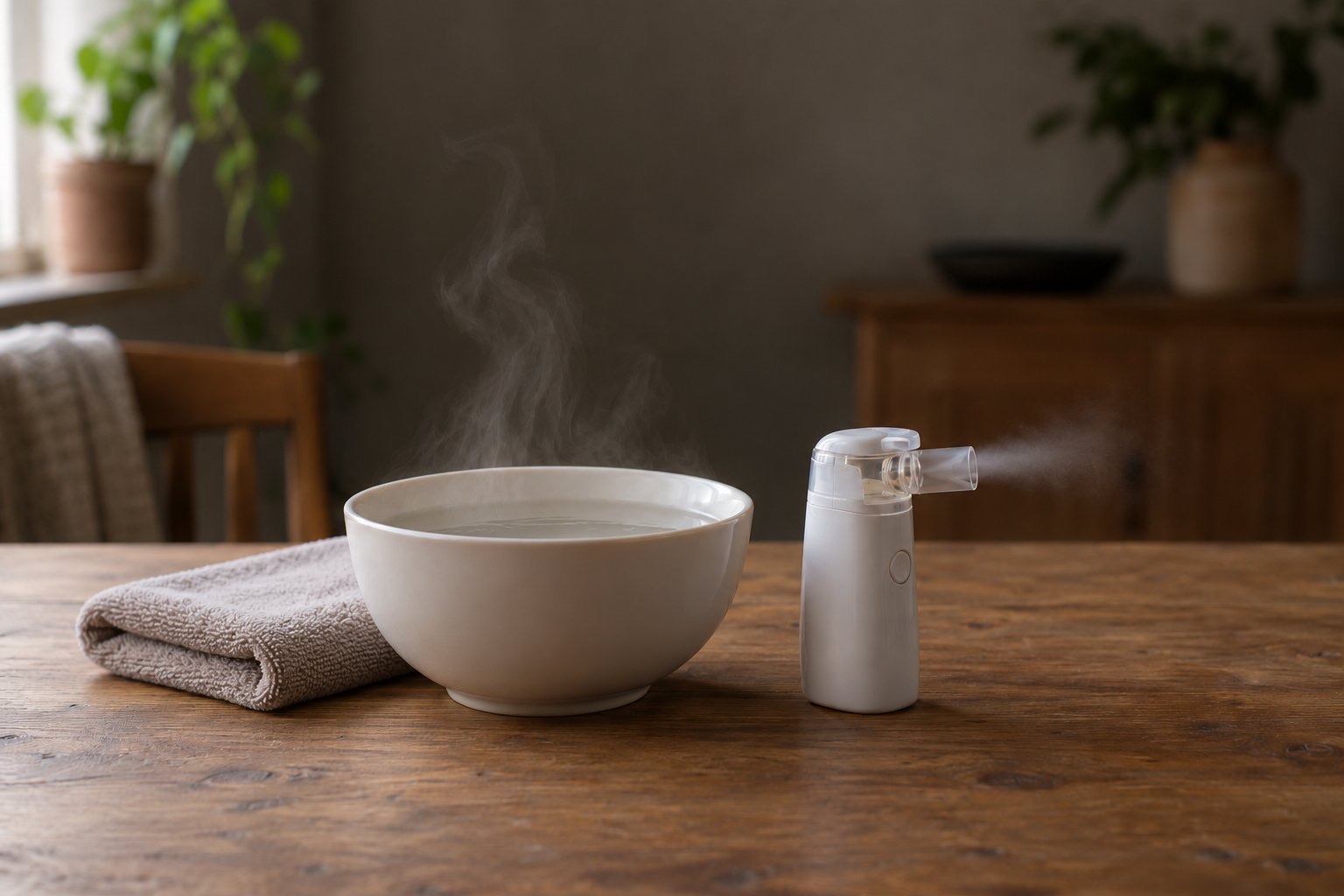
A vocal steamer and a nebulizer are not the same device, and a nebulizer is not a type of steamer. A steamer heats water so you can breathe the warm vapor; a nebulizer turns a small amount of liquid (saline, in the voice studies) into a cool mist without heating anything. None of the studies in our research library tested one against the other, so the practical question is which one fits where you are when you want it.
What each device puts in the air
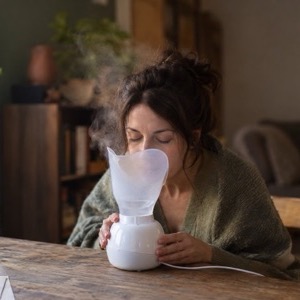
A vocal steamer: warm water vapor
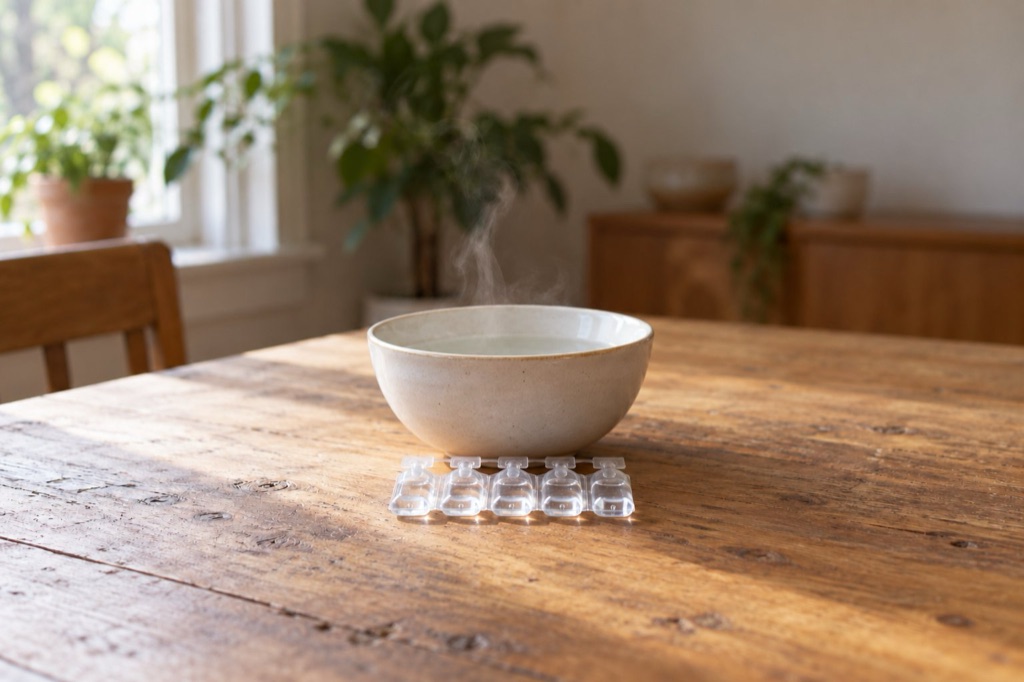
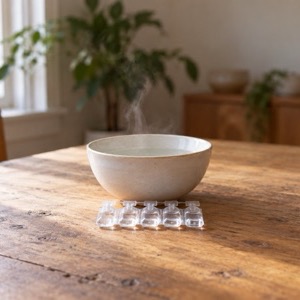
A steamer's output is plain steam. The simplest version is a bowl: the Guy's and St Thomas' NHS page on recovering from vocal cord surgery describes boiled water that has cooled a little (not water that has just boiled), a towel over your head, your head about 20 to 25 cm (8 to 10 inches) from the water, and 5 to 10 minutes of breathing the steam. NHS advice differs on water temperature: the West Suffolk leaflet, which describes a steam-inhaling mug, says just-boiled water from the kettle. An electric steamer swaps the kettle and bowl for its own heater. What is a vocal steamer? goes through the forms.
What goes in is water. On anything else the leaflets differ: the St George's University Hospitals "Voice Care" leaflet, written for people with voice difficulties related to head and neck cancer treatment, says plain water only, no oils; Royal Berkshire says you do not need to add anything to the water; West Suffolk mentions 2 to 3 drops of Olbas or tea tree oil only if you have a cold or throat infection. For an electric steamer, follow its manual (how to use a vocal steamer has the general steps). The bowl method needs hot water and a steady surface; an electric steamer heats its own water and needs power. Hot water scalds, and that is the main thing to respect.
A nebulizer: a cool mist of what is in the cup
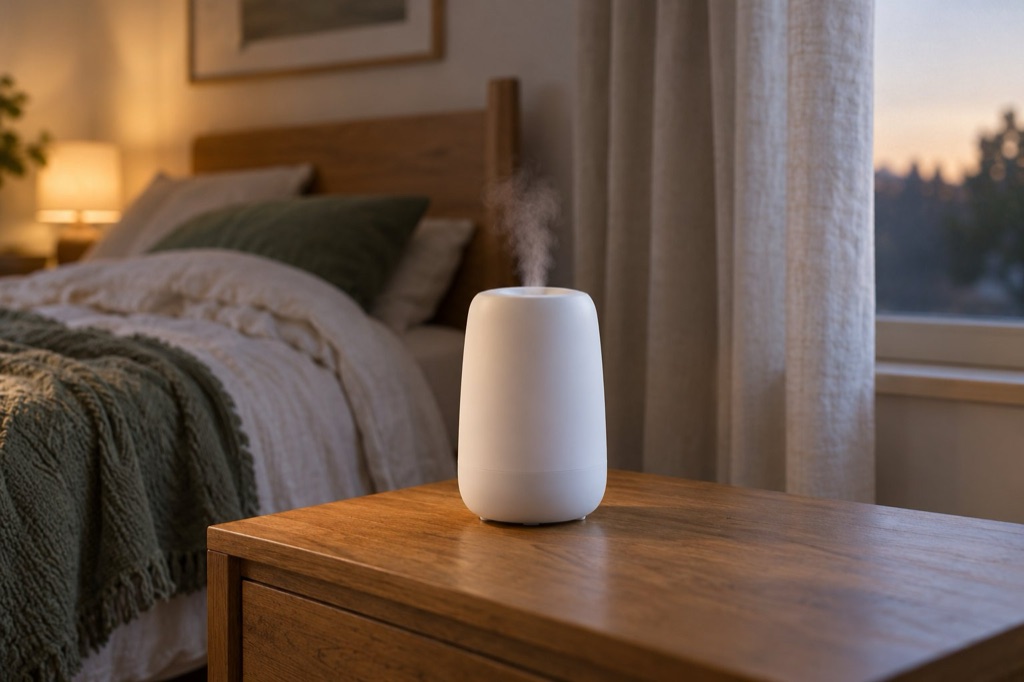
A nebulizer breaks a liquid into a fine mist that you breathe through a mouthpiece or a mask. Nothing is heated, so there is no steam and no hot water. In the voice studies the main liquid was isotonic (0.9%) saline; at home that means sterile saline labeled for inhalation or nebulizer use. Anything a doctor has prescribed goes in only as they direct.
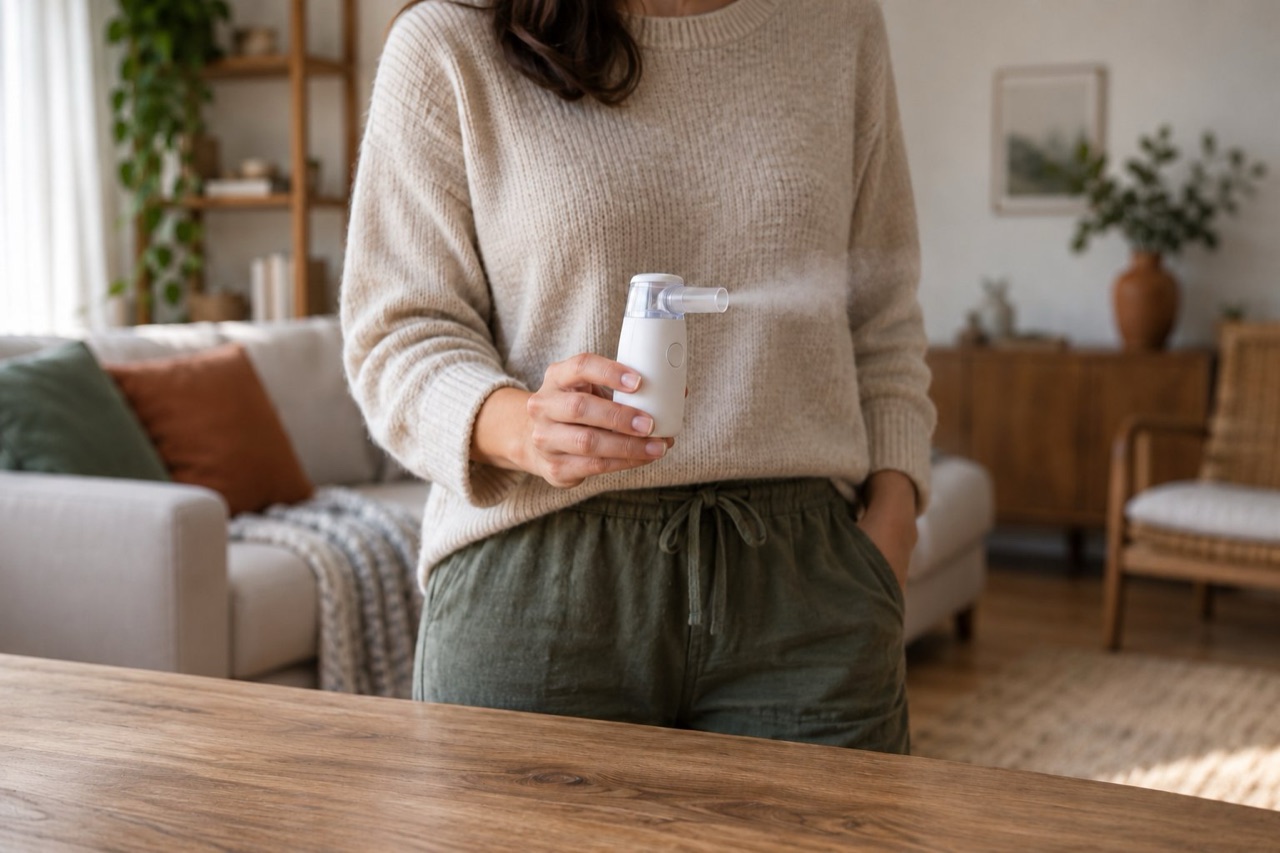
Mesh nebulizers are one type, and rechargeable models run from a built-in battery: no kettle, no wall outlet.
Which one fits which situation
Start from where you will be, then from what you already own.
| Your situation | Leans toward | Why |
|---|---|---|
| At home, with a kettle or outlet nearby and time to sit still | Steam | Hot water is easy, the bowl method needs no purchase, and NHS voice leaflets describe it. |
| Backstage, in a rehearsal room or in a parked car with no outlet | Battery nebulizer, or a cordless steamer | A rechargeable mesh nebulizer needs neither hot water nor an outlet, provided you charged it. A cordless steamer also runs without an outlet; a bowl needs hot water and a plug-in steamer needs an outlet. |
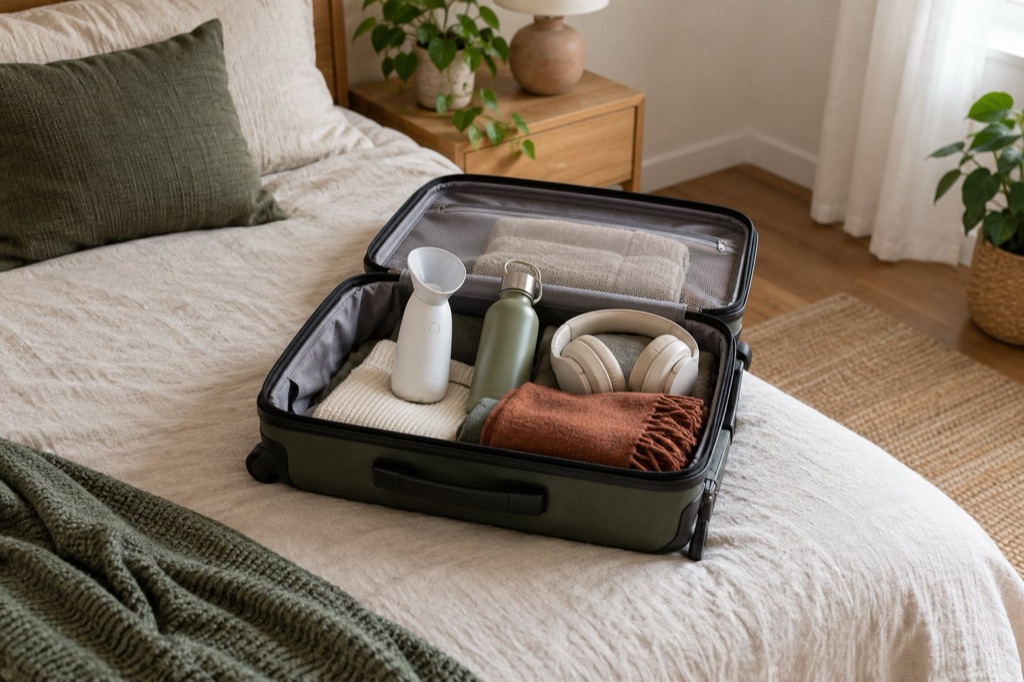
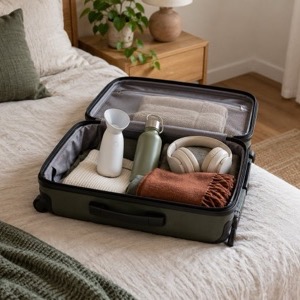
| Traveling | Depends on the room | Steaming is possible wherever you can heat water safely. A rechargeable nebulizer needs a charge, and you must pack sterile saline. |
| Sharing a dressing room | Battery nebulizer, or a handheld steamer rather than a bowl | No open bowl of hot water on a crowded table. For a steamer, go by its maker's hot-water warnings. |
| You own a steamer and like it | Keep the steamer | Nothing in the studies says to replace it. |
| You own a nebulizer | Use it, with sterile saline | The saline studies were done with nebulizers. |
| Steam makes you cough, or you dislike it | Stop steaming | Not everyone likes steam. See the doctor note below. |
At home with time
Steam is the familiar option, and with a bowl it is the cheap one. In a 2024 survey of 288 professional voice users in Canada (MacDonald, You & Fung), 86% had used at least one complementary or alternative remedy for voice loss or a negative voice change; the most common were hot drinks with honey, lemon or both, lozenges, and inhaling steam.
NHS voice leaflets describe steam routines but disagree on length, from 2 to 3 minutes (St George's) to 10 to 15 minutes (West Suffolk); how long to steam your voice sets them side by side.
No outlet: backstage, rehearsal rooms, parked cars, travel
Steam needs hot water, so away from a kettle everything depends on how your steamer is powered. Cordless steam inhalers exist: MyPurMist describes its Free model as cordless, and its user guide says a full charge provides 30 minutes of use (manufacturer's statements, checked October 11, 2026). Check your own steamer's product page before you count on it; portable vocal steamers is about that question.
A rechargeable mesh nebulizer also avoids the problem. According to its store listing (read October 8, 2026), the Mayluck MY139, sold by the company that owns this site, has a built-in rechargeable battery and comes with a Type-C USB charging cable. We have no verified battery-life, size or weight figure for it, so charge it before you leave and check the product page before a trip. Pack saline, because the kit includes none.
Sharing a dressing room
A bowl of hot water is a scald risk on a crowded table, for you and for the person next to you, and so is any steamer whose manual warns of hot water inside. Makers differ: MyPurMist's product page for its Free model gives a temperature of 100 to 115°F and says there is no scalding risk (manufacturer's statement, checked October 11, 2026), so read the warnings for your own model. A nebulizer has nothing hot in it.
What the studies measured
No study we found compared steam with nebulized saline in the same experiment, and the two sets mostly relied on different measures. The main steam study used acoustic measures of the voice signal: jitter, shimmer and harmonics-to-noise ratio (HNR). All three Tanner saline studies measured phonation threshold pressure (PTP), a pressure measure taken in the lab, and ratings of perceived effort; Tanner 2016 and the Santana study also recorded acoustic measures.
| Study | Who and what | Result |
|---|---|---|
| Mahalingam & Boominathan, 2016 (steam) | 45 vocally healthy women aged 18 to 30; about 10 minutes of mouth breathing, then 3 minutes of steam through the mouth from a facial steamer | Jitter and shimmer rose and HNR fell after mouth breathing, then moved back toward baseline after steam. Level of evidence 4. |
| Keltz & McHenry, 2022 (steam) | 12 women; morning warm-up with 3 minutes of steam, 3 minutes of straw-in-water phonation, or both | Highly variable. Of 7 analyzed participants, steam was best for 1 and worst for 3, and those 3 strongly disliked it. |
| Tanner et al., 2007 (saline) | 60 vocally healthy women, 15 per group; 15 minutes of dry air, then nebulized isotonic saline, hypertonic saline, sterile water or no treatment | No nebulized treatment significantly improved PTP recovery; isotonic saline showed a temporary trend toward lower PTP. |
| Tanner et al., 2010 (saline) | 34 classically trained sopranos; 15 minutes of dry air, then nebulized isotonic saline, sterile water or no treatment | Perceived effort returned to baseline only after isotonic saline; PTP did not change significantly. |
| Tanner et al., 2016 (saline) | 10 male trained singers and 10 nonsingers; 30 minutes of dry air, then nebulized 0.9% saline | Self-rated effort and dryness improved; no consistent change in PTP or acoustic measures. |
| Santana et al., 2017 (saline) | 27 public-school teachers in Brazil; 5 minutes of nebulized 0.9% saline after 10 minutes of mouth breathing, daily before teaching, for 4 weeks | Reduction in overall voice alteration not statistically significant; some acoustic measures changed; the authors concluded there was improvement. |
A 2019 systematic review (Alves et al.) reported that only nebulized isotonic solution lowered PTP, that steam inhalation improved noise-to-harmonics ratio, shimmer and jitter, and that systemic hydration (hydrating the body as a whole) was the easiest and most cost-effective approach. The single trials above are less tidy on PTP than that summary; we report each as its abstract states it.
Read together: the studies are small, most start by drying the voice with dry air or mouth breathing, and each device has a favorable result and a null or mixed one. None of the outcomes named above (jitter, shimmer, HNR, PTP, self-rated effort and dryness) is a measure of how well anyone sang. The abstracts do not state which nebulizer models the studies used, so do not read them as tests of any product, including the Mayluck MY139.
Does steam help vocal cords? reads the steam studies more closely. For a research-first comparison, see the Mayluck store's vocal steamer vs. nebulizer article.
When to stop and see a doctor
If steam makes you cough, stop and ask a doctor about it. Neither device is a way to manage a voice problem that is not going away. The NIDCD says to see a doctor if you have been hoarse for more than three weeks (especially without a cold or flu), are coughing up blood, have trouble swallowing or breathing, feel a lump in your neck, have pain when speaking or swallowing, or lose your voice completely for more than a few days.
The nebulizer case, and its limits
The case rests on two facts. The saline studies were done with nebulizers, not steamers. And a battery mesh nebulizer needs no outlet and no hot water, which covers the rows of the table where a bowl or a plug-in steamer is awkward.
The limits are just as plain. A nebulizer is a purchase, and a bowl and towel are not. Saline is a separate purchase that you keep making. The saline evidence includes a null result. We found no study on using the two together.
Mayluck also lists a second rechargeable mesh model, the MY135, which has a rounded digital display. For MY139 support (matching instructions, device issues and replacement parts), see its help center page.
Questions
Is a vocal steamer the same as a nebulizer?
No. A steamer heats water and you breathe the warm vapor. A nebulizer makes a cool mist from a liquid such as sterile saline, with no heat, so it is not a vocal steamer.
Steam inhaler vs. nebulizer for singers: which is better?
There is no evidence-based winner. Steam is familiar, needs no purchase with a bowl, and suits home use. A battery nebulizer or a cordless steamer runs where there is no outlet or hot water.
Can you put saline in a vocal steamer?
Only if the steamer's manual says so. The St George's leaflet says plain water only for steam inhalation, and the saline studies used nebulizers, not steamers. See vocal steamer with saline.
Sources
- Mahalingam & Boominathan, 2016, Laryngoscope (PubMed): steam after mouth breathing, 45 women
- Keltz & McHenry, 2022, Journal of Voice (PubMed): steam and straw phonation in a morning warm-up, 12 women
- Tanner et al., 2007, Journal of Speech, Language, and Hearing Research (PubMed): nebulized saline and water after dry air, 60 women
- Tanner et al., 2010, Journal of Speech, Language, and Hearing Research (PubMed): nebulized isotonic saline in 34 sopranos
- Tanner et al., 2016, Journal of Voice (PubMed): nebulized saline in 10 male singers and 10 nonsingers
- Santana, Masson & Araújo, 2017, Journal of Voice (PubMed): nebulized saline in 27 teachers over 4 weeks
- Alves et al., 2019, Journal of Voice (PubMed): systematic review of hydration and the voice
- MacDonald, You & Fung, 2024, Journal of Voice (PubMed): survey of 288 professional voice users in Canada
- Guy's and St Thomas' NHS Foundation Trust, "Recovering from vocal cord surgery": patient information page, written for people having vocal cord surgery
- St George's University Hospitals NHS Foundation Trust, "Voice Care" (published October 2023): head and neck cancer patient leaflet
- Royal Berkshire NHS Foundation Trust, "Voice care tips for a healthy voice" (August 2025): patient leaflet
- West Suffolk NHS Foundation Trust, "Practical voice care": patient leaflet
- NIDCD, "Hoarseness": when to see a doctor
- MyPurMist Free product page: manufacturer statements, checked October 11, 2026
- MyPurMist Free user guide (PDF): manufacturer statements, checked October 11, 2026
- Mayluck product listings (mayluck.store): features and kit contents, read October 8, 2026