
 VocalSteamer Editorial Team

A mesh nebulizer for singers is worth considering when you want a portable cool-mist device and can accommodate its liquid, charging and care requirements. The useful buying questions are practical: will it work where you perform, are the attachments comfortable to hold, and can you get instructions and replacement parts? A product marketed as a singing nebulizer still needs to meet those practical requirements; the label alone does not establish better vocal results.
This is a research-based buying guide, not a hands-on ranking. We have not tested battery endurance, noise, leak resistance or vocal outcomes. The product linked below is sold by the company that owns VocalSteamer; that relationship does not change the checks we recommend.
Mesh nebulizer or vocal steamer?
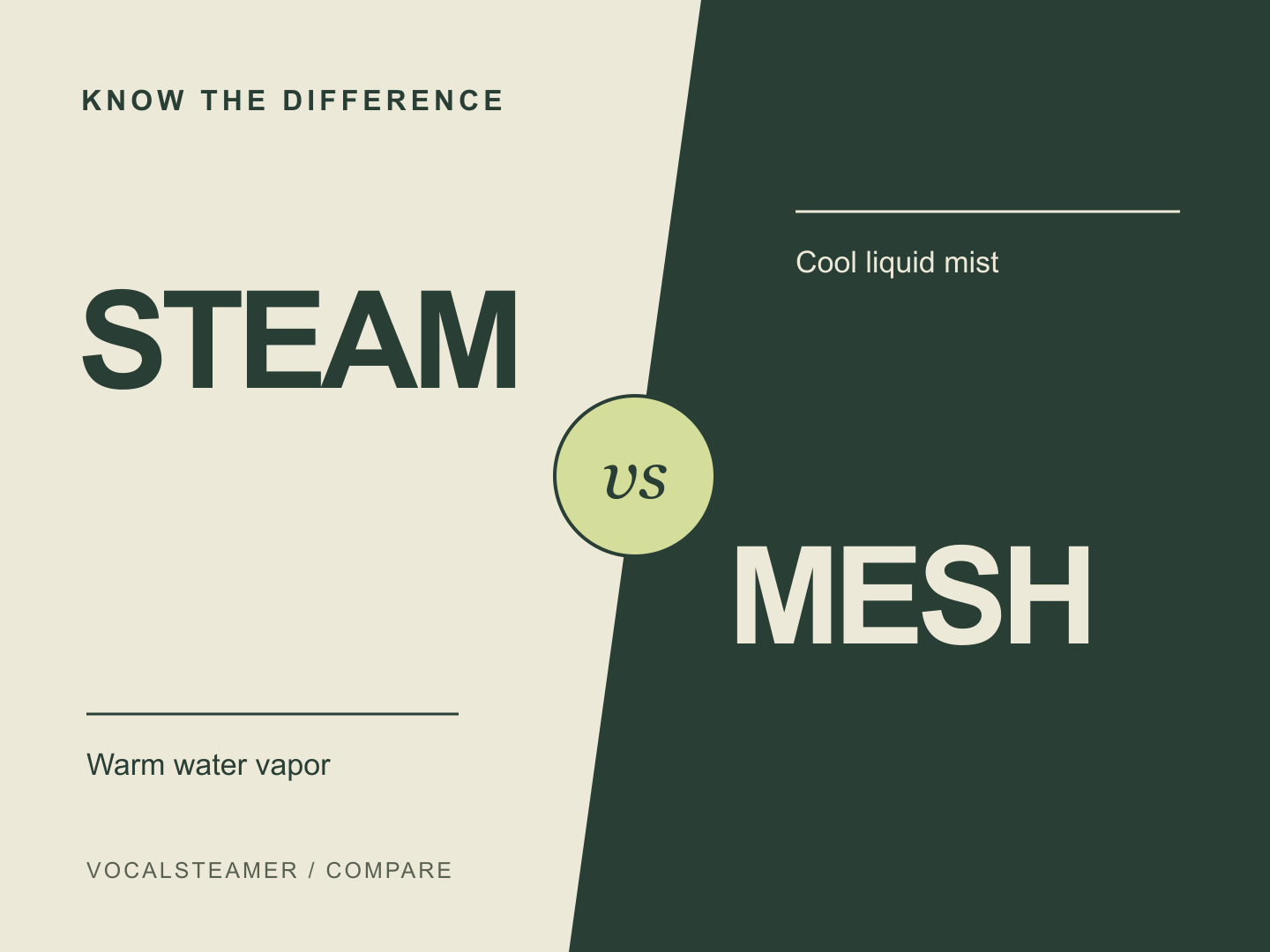
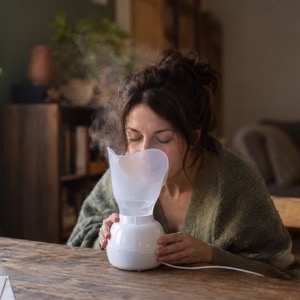
A vocal steamer supplies warm water vapor. A mesh nebulizer makes a cool mist from liquid in its cup without heating water. A battery model therefore avoids the need for a kettle or a wall outlet during use, although you still need to charge it. It also avoids waiting for a heated reservoir to cool before packing.
That can be useful backstage or while travelling. At home, an existing steamer may already suit your routine. Neither option automatically fixes a poor battery, loose mouthpiece or difficult cleaning schedule. The steam-versus-nebulizer comparison explains these practical differences.
Power that fits your day
Ask how many sessions a full charge supports at the setting you intend to use. A 10-minute timer describes when a session ends; it does not mean that a charge lasts only 10 minutes, or prove that it lasts all day. Battery capacity alone is not a substitute for a documented run-time figure.
- Confirm whether the device has a rechargeable battery, replaceable batteries or requires external power.
- Check the approved charger specifications and whether an adapter is included or only a cable.
- Confirm whether operation while charging is allowed. Do not infer that from a USB socket.
- Before relying on it away from home, check its operation during normal use and leave time to resolve a charging problem.
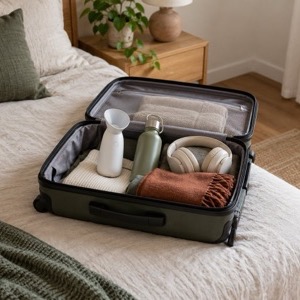
For a tour or performance day, pack according to the exact model’s transport instructions. Keep the guide and support contact accessible with your order record.
Mouthpiece, mask and cup
Look closely at how the mouthpiece attaches and how the device must be held. Ask whether the connection locks, which operating position the instructions require, and whether the mask needs a supporting hand. A mask included in the box is not evidence of hands-free operation.
Identify replacement parts by name. A mask-and-mouthpiece set is different from a liquid cup or mesh assembly. If the cup stops working, extra masks will not replace it. Before buying, ask whether the exact cup is available, what it costs and whether support needs the full model code to identify it.
Liquid and care are part of the purchase
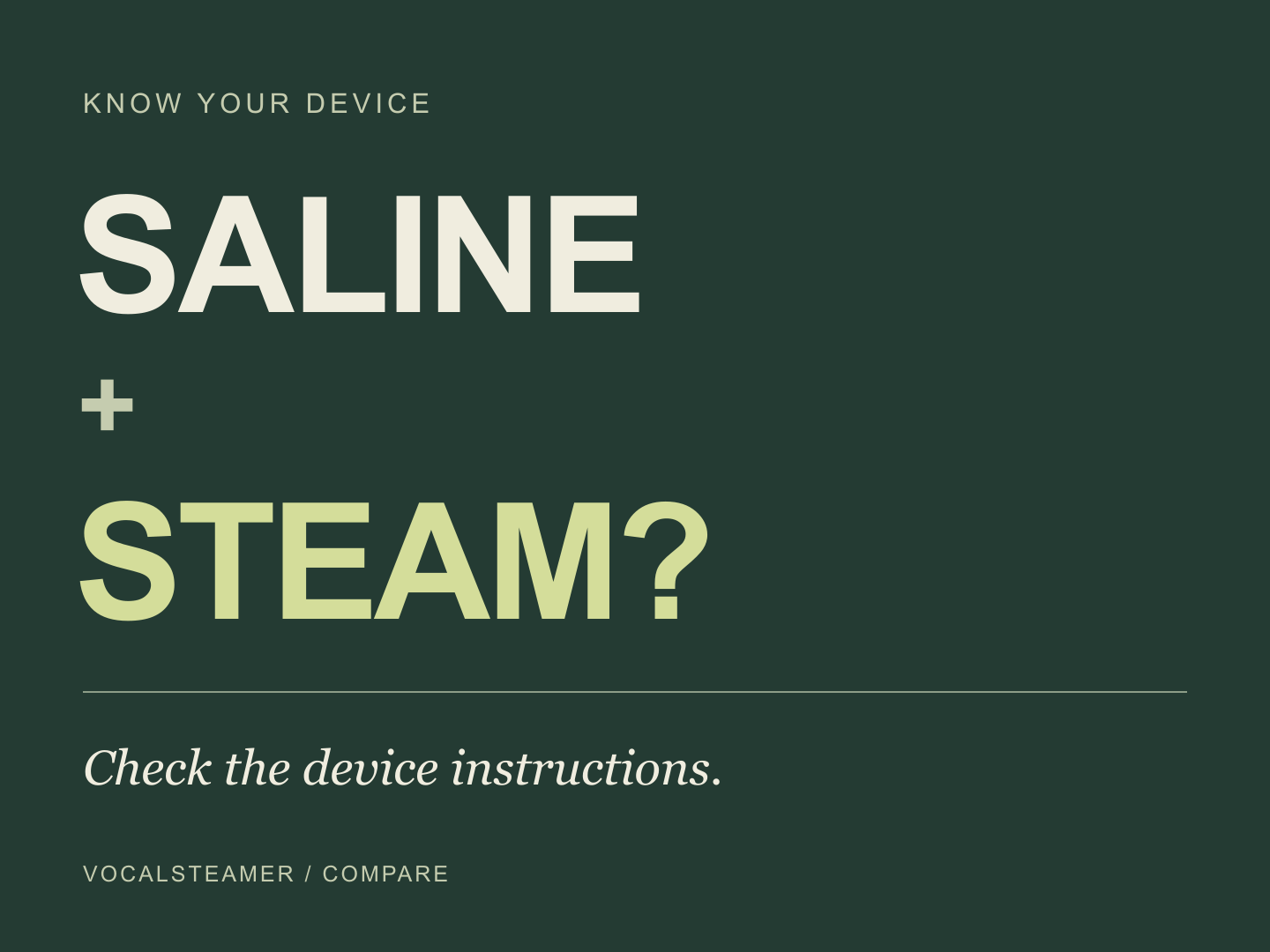
The voice studies discussed here used nebulized solutions under study protocols. They do not establish that any bottle of saline is appropriate for any device. Check both the liquid label and your device instructions; prescribed treatment belongs under your clinician’s direction. Our saline guide explains why steamer water rules and nebulizer liquid rules should not be interchanged.
Read the care instructions before ordering. You should be able to identify the permitted cleaning, disinfection, drying and storage steps for each component. A detachable cup does not mean every part can be soaked or heated, and a self-cleaning label does not describe all the care that may remain.
For the linked device, the component care guide helps organize those instructions; it is a general checklist, not a replacement for the matching model manual. That support site is operated by the company that owns this blog.
Price, parts and support
Compare complete packages. A low headline price may exclude liquid, a case or a power adapter. Record the device price and delivery cost, then price recurring supplies and replacement parts separately. Without a documented replacement interval, a precise annual ownership estimate would be guesswork.
Check warranty coverage for the main device and cup separately, return conditions after opening, and which support channel handles your purchase. Keep the written terms with the order confirmation. Our ownership-cost guide applies the same checks to both device types.
What vocal benefits are established?
In a study of 34 classically trained sopranos following a dry-air challenge, self-rated effort returned to baseline after nebulized isotonic saline, but phonation threshold pressure did not change significantly. In a separate study of 60 vocally healthy women, none of the nebulized treatments significantly improved recovery of that pressure measure. These findings do not establish that a particular consumer device improves singing or is superior to steam.
Treat comfort reports as personal experiences, not proof that a device repairs an injured voice. The research library separates the studies, outcomes and limitations. Choosing a device for convenience is a different decision from seeking treatment for a voice problem.
If it does not work as expected
Separate the symptom before asking for help: no power, power with no mist, weak output, stopping after startup, or a leak. Record when it started, the indicators and any recent changes in assembly, charging or care. Those details are more useful than “it is broken” and do not require guessing the cause.
The linked model’s instruction and troubleshooting page directs you to the matching support route. Avoid adapting a repair or cleaning method from another brand. A missing instruction is a reason to request the correct guide, not to improvise. If you already own an APOWUS device, our APOWUS manual and power checks explain what to match before following instructions found online.
Questions
What is the best mesh nebulizer for singing?
We have not established a best model. Choose by documented power requirements, attachment fit, care, replacement-part availability and support. The voice studies summarized here do not rank consumer nebulizers, and we have not tested the linked device hands-on.
Do I need both a vocal steamer and a nebulizer?
Not necessarily. A steamer may fit a home routine; a battery mesh nebulizer may fill a travel gap where there is no kettle or outlet. Buying both adds cost and two care routines. The practical benefit depends on where you use them, not on an established need to combine the two.
Are extra accessory sets spare nebulizer cups?
Not necessarily. The linked model’s support page describes its mask-and-mouthpiece accessory set as excluding a medicine cup or mesh head. Check the exact component name and package contents instead of assuming an extra set replaces the mist-producing assembly.
Does USB charging tell me how long it runs?
No. USB describes the connection, not the number of sessions per charge or whether use while charging is permitted. Ask for the exact model’s documented run time and charging instructions. No verified sessions-per-charge figure is available in this guide for the linked MY139.
Sources
- Tanner et al., 2010: nebulized isotonic saline versus water after a dry-air challenge — primary study, 34 trained sopranos.
- Tanner et al., 2007: three nebulized osmotic agents in the dry larynx — primary study, 60 vocally healthy women.
- MY139 model support page — device format, power, cup and accessory definitions; checked October 16, 2026. Common ownership with this site.
- Model-based cleaning checklist — manufacturer support guidance, checked October 16, 2026. Common ownership with this site.